
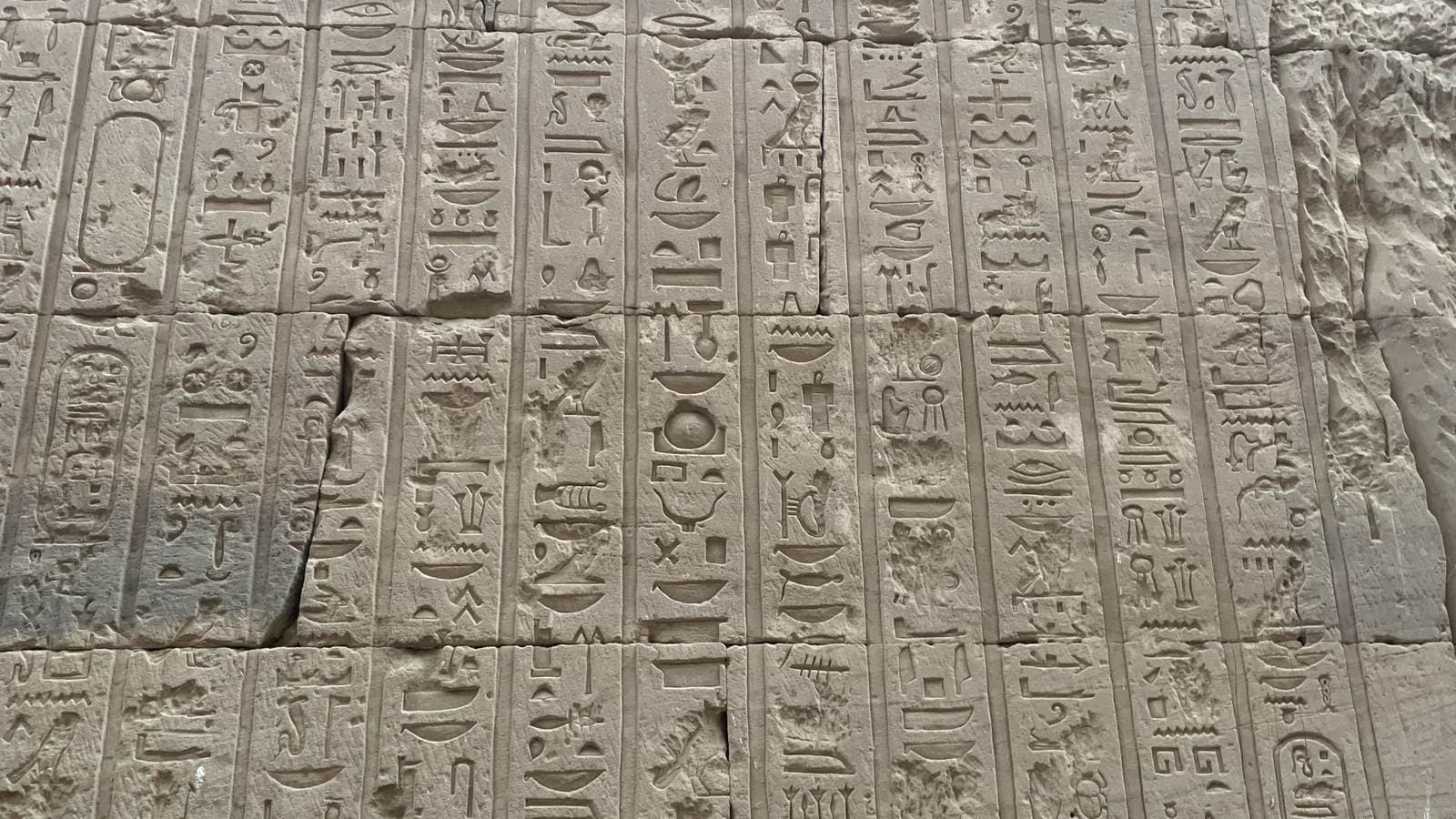
Modern-day journals give us a private space in which our own lives are worthy of attention. We can record what happened, explore how it made us feel, question our choices, and leave a message for a future version of ourselves. A journal can be a record, a thinking tool, a witness, or simply somewhere to put thoughts that have nowhere else to go. But writing was not originally created for personal reflection.
The history of journaling begins with a more basic human need: remembering what might otherwise be lost.
Before Journals, Writing Became an External Memory
More than 5,000 years ago, people in ancient Mesopotamia began pressing marks into clay tablets. Many of the earliest surviving examples of cuneiform were practical tools that recorded transactions, supplies, rations, property, and other information that communities needed to preserve. For example, a 3100–3000 BCE clay tablet now at the British Museum records quantities of beer (British Museum, n.d.).
These tablets were not journals in the modern sense. The people writing them were not necessarily documenting their private fears, ambitions, or relationships. But they introduced an idea on which every journal still depends: human memory could be moved outside the mind. An event no longer had to disappear when the person who witnessed it forgot. A quantity, observation, story, or decision could be preserved and revisited.
Writing gradually expanded beyond administration. Clay tablets recorded medicine, literature, religious texts, astronomy, royal correspondence, and historical events. The Library of Ashurbanipal alone contained more than 30,000 tablets and fragments covering a wide range of knowledge (British Museum, 2018).
Before writing could help people examine themselves, it first helped societies remember their world.
When Writing Turned Inward
Thousands of years later, written words began doing more than preserving information. They became a way to work on the self.
In the second century CE, the Roman emperor Marcus Aurelius recorded the thoughts now known as Meditations. He appears to have written them for himself, using writing to rehearse Stoic principles, examine his conduct, and remind himself how he wanted to live. His entries include many private mental exercises: repeated attempts to correct his reactions, maintain perspective, and live according to his values (Marcus Aurelius, 2002).
A few centuries later, Augustine of Hippo used autobiographical reflection differently. In Confessions, written around 396–400 CE, Augustine examined his memories, desires, mistakes, beliefs, and transformation through the lens of his faith. The work was intended for an audience and should not be confused with a private journal. Yet its intense examination of an individual life helped demonstrate that personal experience could be serious philosophical and spiritual material (Augustine, 2008). The Stanford Encyclopedia of Philosophy describes it as “philosophy in autobiography” rather than autobiography in the modern sense (Tornau, 2019).
In Japan's Heian period, which lasted from 794 to 1185, a literary form known as nikki bungaku, or diary literature, became especially important. Court women were especially important to the flourishing of Japanese prose and personal writing (Department of Asian Art, 2002; Shirane et al., 2016). Works such as The Gossamer Years, The Diary of Murasaki Shikibu, and The Sarashina Diary blended accounts of daily life with reflections on relationships, longing, disappointment, and social expectations (Mother of Michitsuna, 1964; Murasaki Shikibu, 2005; Lady Sarashina, 2006).
Sei Shōnagon's The Pillow Book, written around the beginning of the eleventh century, emerged from the same world of Heian court writing. Through observations, anecdotes, opinions, poems, and lists, Sei Shōnagon preserved what delighted, irritated, amused, and interested her. Her writing captured something recognizable to modern journalers: the desire to notice life closely and record not only what happened, but how the world appeared to one particular person (Sei Shōnagon, 2006).
In the sixteenth century, the Spanish Carmelite nun Teresa of Ávila used autobiographical writing to examine her spiritual and inner development. In The Book of Her Life, she reflected on prayer, doubt, personal failings, mystical experiences, and the gradual transformation of her inner life (Teresa of Ávila, 2008). While not a typical private journal in the modern sense, her intensely personal account illustrates one of reflective writing's most enduring purposes: turning inward to understand experiences that are difficult to interpret while we are living through them. Her writing shows that recording a life can be more than preserving events. It can also be a way of tracing how a person's beliefs, identity, and understanding change over time.
Private notebooks also became places to develop ideas. Leonardo da Vinci filled pages with sketches, questions, calculations, mechanical designs, anatomical observations, and unfinished thoughts (Leonardo da Vinci, 2008). Charles Darwin filled a series of pocket notebooks with observations, reading notes, questions, and speculative ideas about how species change. These notebooks eventually contributed to Darwin's development of the theory of natural selection (Darwin, 1987). And Michael Faraday documented his experiments and the thought process behind inventions and discoveries including the electric motor, induction ring, and generator (Faraday, 1932–1936).
All these examples show another function journaling still serves: allowing thought to remain unfinished. A notebook does not require an idea to be ready. It gives curiosity somewhere to develop.
When a Journal Becomes a Record of Who We Were
As diary-keeping became more recognizable in its modern form, people increasingly documented both public events and private routines.
Samuel Pepys began his diary in 1660 and recorded political developments and historic events, including the Great Plague and the Great Fire of London. But he also wrote about work, money, entertainment, relationships, physical discomfort, personal ambitions, and his own shortcomings (Pepys, 2018). That combination made his diary historically important, as he described major events and preserved the ordinary texture surrounding them.
On June 12, 1942, Anne Frank received the diary that would demonstrate the extraordinary historical power of one person's private voice. Her entries documented life hiding under Nazi persecution, and are filled with frustration, hope, self-criticism, curiosity, and reflections on the person she was becoming (Frank, 1995). Her diary brings us closer to the human reality of the Holocaust in a way that official records alone cannot, allowing us to feel the horror of that terrible time from a personal perspective, which makes it even more devastating. There were many other accounts of this kind — which, for reasons I still cannot entirely explain, I obsessively devoured in my late teenage years — like Zlata's Diary and Homage to Catalonia (although the latter is more of a memoir) (Filipović, 2006; Orwell, 1938).
Diaries preserve history differently from official records. An official document might tell us what happened, but a journal can show us what it felt like to be there.
We do not always need to turn to famous historical figures to recover the truth of another time. Our own old entries, or those of someone we love, can reveal how life once looked from the inside.
Recently, I reread journals I had written ten years earlier, while solo-traveling through Thailand and Australia. For the first time in my life, I had experienced what felt like complete freedom. Most of my decisions affected little beyond where I would go next or where I would sleep that night. That changed when I began my research placement at The Florey Institute of Neuroscience and Mental Health in Melbourne. My journal captured how difficult I found the transition. Suddenly, my choices carried consequences beyond the next destination, and I experienced that responsibility almost as a loss of freedom.
Reading those entries ten years later, just five days before the due date of my first child, made the contrast almost funny. My decisions are about to carry greater consequences than they ever have before, yet responsibility no longer feels like something that limits my freedom. Over the course of this decade, I learned that caring for something beyond yourself — whether that be a child, a project, or a dream — can bring a kind of meaning that complete independence cannot.
My young self had confused freedom with the absence of responsibility. But I found that younger version of myself beautiful. Her first taste of independence was naïve, but it was real. Those entries preserved the beginning of a journey that eventually brought me here. Reading them did more than remind me what had happened. They allowed me to recover how life looked from the inside, and to meet the person I had been while living it.
From Self-Examination to Psychological Research
By the late nineteenth century, the inner life had also become an object of systematic psychological investigation. Sigmund Freud did not study journaling as we understand it today. But in intimate letters to his friend and collaborator Wilhelm Fliess, Freud recorded and discussed his dreams, memories, associations, uncertainties, and emerging ideas (Freud, 1985). This process contributed to the ideas he later developed in The Interpretation of Dreams (Freud, 2010). Despite his many flaws, his work formed part of a cultural shift in which dreams, memories, recurring thoughts, and internal conflicts came to be treated as material that could be recorded and interpreted. A journal page was moving from a place to describe life to also become a place to investigate the mind.
If you are interested in recording and revisiting your own dreams, you can explore Aksha's dream-journaling features.
Scientific research into expressive writing arrived later. Beginning in the 1980s, psychologist James Pennebaker and his colleagues studied what happened when people wrote about emotionally significant or difficult experiences. This work helped establish expressive writing as a subject of psychological research rather than only a personal or literary practice (Pennebaker & Beall, 1986). The research does not show that all journaling works equally well for everyone. Writing methods, circumstances, outcomes, and individual responses vary (Sohal et al., 2022). Still, the field formalized an idea journalers had explored for centuries: putting an experience into words may change how we relate to it.
From Paper Journals to Digital Memory
For most of journaling's history, the physical object mattered. Clay tablets endured and paper notebooks could be carried, hidden, inherited, damaged, or discovered. Digital journaling changed the container, and suddenly thousands of entries could be stored, searched, backed up, and accessed from different devices. The choice between handwriting and digital journaling is not simply a contest between an old and a new method. Each supports reflection differently, and the most useful method is generally the one a person can sustain. That distinction is explored more fully in Aksha's article, The Power of Journaling: Why the Best Method Is the One You'll Actually Use.
But early digital journals largely preserved the structure of paper ones: entries were still usually arranged by date, and retrieving an old thought depended on remembering when it was written or which exact words to search.
Artificial intelligence introduces a different possibility. An AI journal can help someone retrieve conceptually related entries even when they do not remember the original wording, surface possible themes across time, and generate questions for deeper reflection. AI journaling is therefore not a rejection of traditional journaling. It is the latest development in a much older human project: preserving experience so that we can return to it with greater perspective. You can read more about AI journaling in What Is AI Journaling? How Aksha Came to Be.
The Tools Changed. The Human Need Did Not.
The history of journaling is not a straight line beginning with one inventor or one first diary. It is a collection of related practices that developed across cultures and eras: People recorded resources because communities needed to remember. Philosophers wrote private reminders about how to live. Religious thinkers examined memory, morality, and belief. Scientists and artists used notebooks to develop unfinished ideas. Diarists preserved ordinary life alongside historic events. Psychologists began studying how writing might affect the way people process experience. Digital tools made personal writing searchable and portable. And I learned I have grown more than I was aware of 🙂
AI is beginning to make it possible to explore connections across an entire body of personal writing. Yet beneath all those changes is the same human impulse. We write because life moves faster than memory. We write because an experience can feel different once it has been put into words. We write because the person we are today may understand something the person we were yesterday could not, and because the person we become tomorrow may need something we are able to preserve now.
From clay tablets to private notebooks to AI-powered journals, the medium has evolved. The desire to remember, understand, and be understood has not.
About Aksha
Aksha is an AI-powered journaling app designed to help people reflect on their experiences, revisit meaningful memories, and explore possible patterns across their writing.
The journal belongs to you. The AI is there to help you explore it.
By Laura, Co-founder of Aksha. Published August 2026.
References
Anne Frank House. (n.d.). Anne receives a diary. https://www.annefrank.org/en/timeline/14/anne-receives-a-diary/
Augustine. (2008). Confessions (H. Chadwick, Trans.). Oxford University Press. (Original work written ca. 397–400 CE). https://global.oup.com/academic/product/st-augustines-confessions-9780199537822
British Museum. (2018, October 25). A library fit for a king. https://www.britishmuseum.org/blog/library-fit-king
British Museum. (n.d.). The British Museum Society tablet: Record of beer [Clay tablet]. https://www.britishmuseum.org/collection/object/W_1989-0130-4
Darwin, C. (1987). Charles Darwin's notebooks, 1836–1844: Geology, transmutation of species, metaphysical enquiries (P. H. Barrett, P. J. Gautrey, S. Herbert, D. Kohn, & S. Smith, Eds.). Cambridge University Press. (Original work written 1836–1844). https://www.cambridge.org/gb/universitypress/subjects/life-sciences/darwin/
Department of Asian Art. (2002, October). Heian period (794–1185). The Metropolitan Museum of Art. https://www.metmuseum.org/essays/heian-period-794-1185
Faraday, M. (1932–1936). Faraday's diary: Being the various philosophical notes of experimental investigation made by Michael Faraday during the years 1820–1862 (T. Martin, Ed.; Vols. 1–7). G. Bell and Sons. (Original work written 1820–1862). https://www.rigb.org/explore-science/explore/person/michael-faraday-1791-1867
Filipović, Z. (2006). Zlata's diary: A child's life in wartime Sarajevo. Penguin Books. (Original work published 1993). https://www.penguinrandomhouse.com/books/323402/zlatas-diary-by-zlata-filipovic/
Frank, A. (1995). The diary of a young girl: The definitive edition (O. H. Frank & M. Pressler, Eds.; S. Massotty, Trans.). Doubleday. (Original work written 1942–1944). https://www.penguinrandomhouse.com/books/55694/the-diary-of-a-young-girl/
Freud, S. (1985). The complete letters of Sigmund Freud to Wilhelm Fliess, 1887–1904 (J. M. Masson, Ed. & Trans.). Belknap Press of Harvard University Press. (Original letters written 1887–1904). https://books.google.com/books/about/The_Complete_Letters_of_Sigmund_Freud_to.html
Freud, S. (2010). The interpretation of dreams (J. Strachey, Ed. & Trans.). Basic Books. (Original work published 1900). https://www.hachettebookgroup.com/titles/sigmund-freud/the-interpretation-of-dreams/9780465019779/
Lady Sarashina. (2006). As I crossed a bridge of dreams (I. Morris, Trans.). Penguin Classics. (Original work written ca. 1060). https://www.penguin.co.uk/books/34937/as-i-crossed-a-bridge-of-dreams/
Leonardo da Vinci. (2008). Notebooks (I. A. Richter, Sel.; T. Wells, Ed.). Oxford University Press. https://global.oup.com/academic/product/notebooks-9780199299027
Marcus Aurelius. (2002). Meditations (G. Hays, Trans.). Modern Library. (Original work written during the second century CE). https://www.penguinrandomhouse.com/books/6367/meditations-by-marcus-aurelius/
Mother of Michitsuna. (1964). The gossamer years: The diary of a noblewoman of Heian Japan (E. Seidensticker, Trans.). Charles E. Tuttle. (Original work written ca. 974). https://unesdoc.unesco.org/ark:/48223/pf0000129093
Murasaki Shikibu. (2005). The diary of Lady Murasaki (R. Bowring, Trans.). Penguin Classics. (Original work written ca. 1010). https://www.penguin.co.uk/books/34345/the-diary-of-lady-murasaki/
Orwell, G. (1938). Homage to Catalonia. Secker & Warburg. https://www.orwellfoundation.com/the-orwell-foundation/orwell/books-by-orwell/homage-to-catalonia/
Pennebaker, J. W., & Beall, S. K. (1986). Confronting a traumatic event: Toward an understanding of inhibition and disease. Journal of Abnormal Psychology, 95(3), 274–281. https://doi.org/10.1037/0021-843X.95.3.274
Pepys, S. (2018). The diary of Samuel Pepys (K. Loveman, Sel. & Intro.). Everyman's Library. (Original work written 1660–1669). https://www.penguinrandomhouse.com/books/586538/the-diary-of-samuel-pepys/
Sei Shōnagon. (2006). The pillow book (M. McKinney, Trans.). Penguin Classics. (Original work written ca. 1002). https://www.penguin.co.uk/books/35382/the-pillow-book-by-shonagon-sei/9780140448061
Shirane, H., Suzuki, T., & Lurie, D. (Eds.). (2016). The Cambridge history of Japanese literature. Cambridge University Press. https://doi.org/10.1017/CHO9781139245869
Sohal, M., Singh, P., Dhillon, B. S., & Gill, H. S. (2022). Efficacy of journaling in the management of mental illness: A systematic review and meta-analysis. Family Medicine and Community Health, 10(1), Article e001154. https://doi.org/10.1136/fmch-2021-001154
Teresa of Ávila. (2008). The book of her life (K. Kavanaugh & O. Rodriguez, Trans.). Hackett Publishing Company. (Original work completed ca. 1565). https://hackettpublishing.com/political-theory/the-book-of-her-life
Tornau, C. (2019). Augustine of Hippo. In E. N. Zalta (Ed.), The Stanford Encyclopedia of Philosophy. Stanford University. https://plato.stanford.edu/entries/augustine/